
Buy-to-Let Remortgages
Receive expert remortgage advice tailored to your unique situation.
Our remortgage advisors can assist you in securing a competitive remortgage deal, purchasing additional properties, and releasing equity from your home.

What is a Buy-to-Let Remortgage?
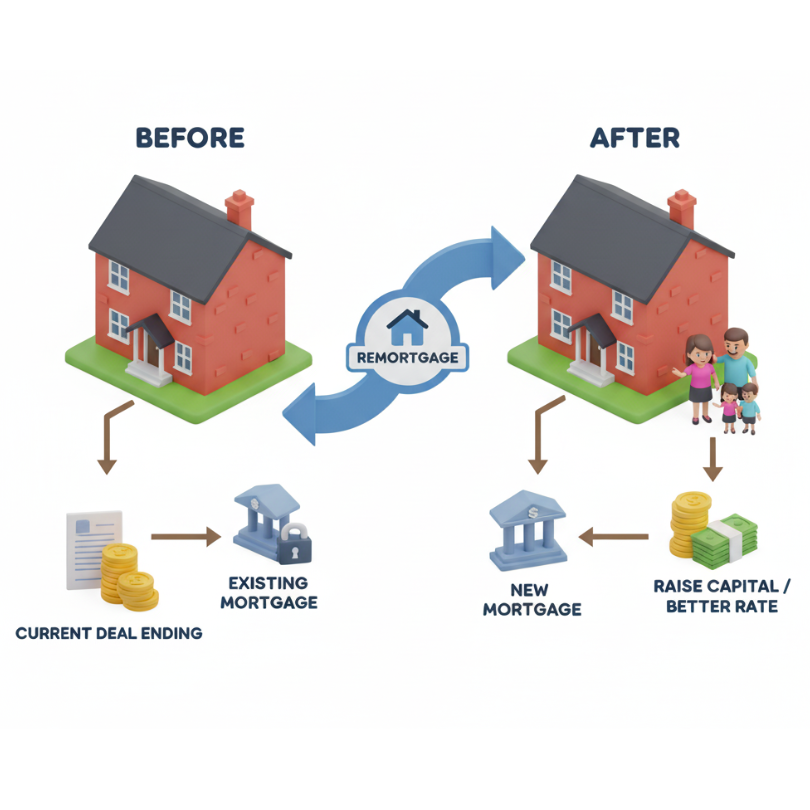
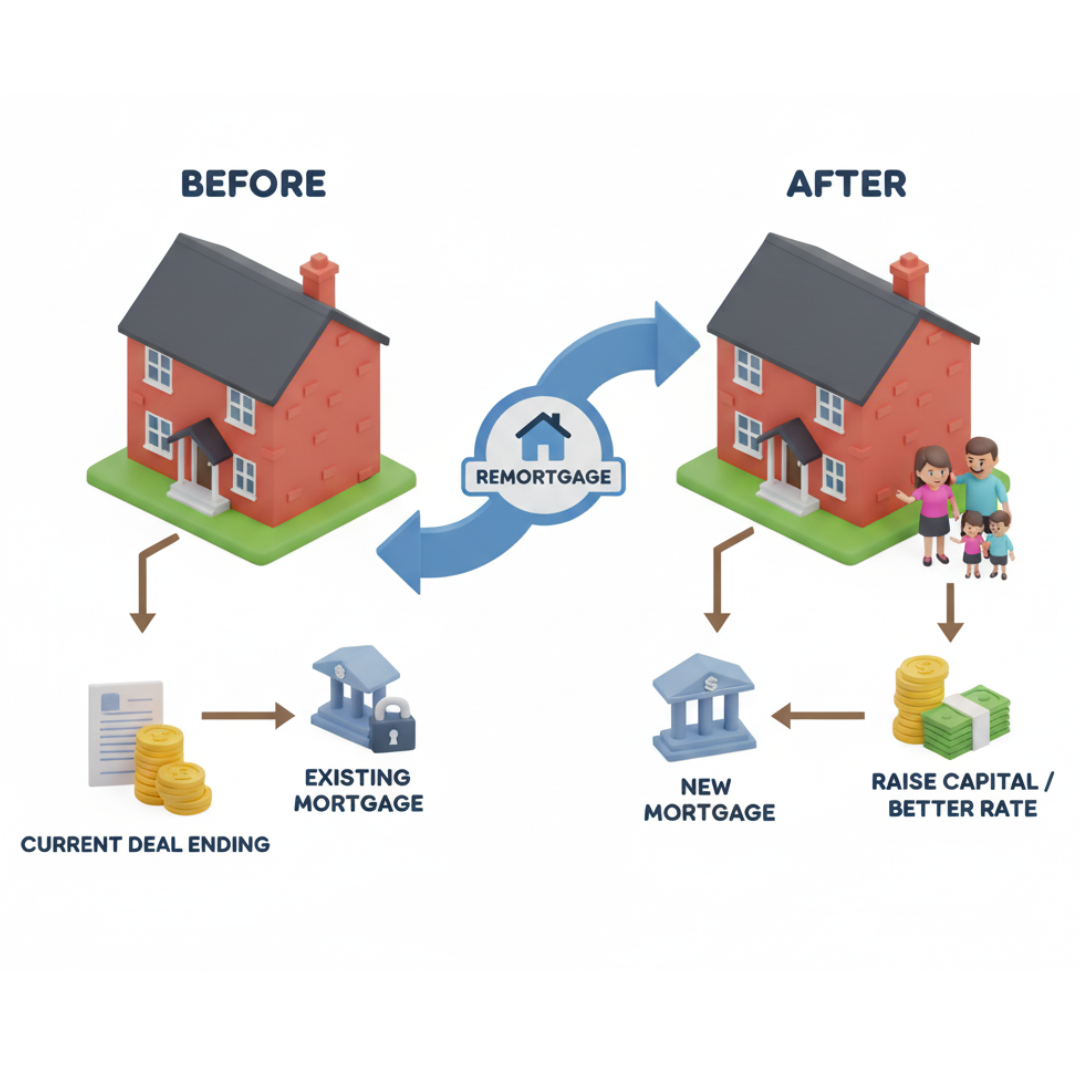
A Buy-to-Let (BTL) remortgage is when a property owner re-finances an existing mortgage on a rental property to secure a better deal or to release equity. This can be done to lower monthly payments, access better interest rates, or raise capital to fund other property investments. Many landlords opt to remortgage to take advantage of more competitive rates, or when their current deal comes to an end.
What is a Buy-to-Let Remortgage?
A Buy-to-Let (BTL) remortgage is when a property owner re-finances an existing mortgage on a rental property to secure a better deal or to release equity. This can be done to lower monthly payments, access better interest rates, or raise capital to fund other property investments. Many landlords opt to remortgage to take advantage of more competitive rates, or when their current deal comes to an end.
Types of Buy-to-Let Remortgage Deals
There are several types of remortgage deals for landlords, each offering unique benefits depending on your goals and financial situation:
- Fixed-Rate Buy-to-Let Remortgages
These mortgages offer a fixed interest rate for a specific period (usually 2, 3, or 5 years). This provides certainty, as your monthly payments remain the same throughout the fixed term, regardless of changes in the market. - Variable-Rate Buy-to-Let Remortgages
A variable-rate mortgage has an interest rate that can fluctuate, meaning your monthly payments can increase or decrease. These mortgages may be linked to the lender’s Standard Variable Rate (SVR) or another benchmark rate. - Tracker Buy-to-Let Remortgages
A tracker mortgage is directly linked to a specific benchmark rate, such as the Bank of England base rate. The rate on your mortgage will track this benchmark, usually with a set margin added to it, which means your payments can rise or fall depending on changes in the base rate. - Discounted Buy-to-Let Remortgages
Discounted deals offer a reduction on the lender’s Standard Variable Rate (SVR) for a certain period. While these mortgages can offer lower initial payments, your monthly cost could increase if the lender raises their SVR. - Interest-Only Buy-to-Let Remortgages
With an interest-only mortgage, you only pay the interest on the loan for a fixed period, meaning your monthly payments will be lower. However, the principal loan balance remains the same, and you’ll need to pay off the loan in full at the end of the term. - Capital Repayment Buy-to-Let Remortgages
With this type of mortgage, your payments cover both the interest and the principal, reducing the loan balance over time. This option ensures that your debt is paid off by the end of the mortgage term. - Portfolio Buy-to-Let Remortgages
For landlords with multiple properties, portfolio buy-to-let remortgages take your entire portfolio into consideration when assessing your remortgage options. This can provide opportunities for better rates or larger loans based on the performance of your portfolio.
Each remortgage deal offers distinct advantages depending on your needs. Whether you’re looking to reduce your monthly payments, release equity, or fund new property investments, a mortgage broker can guide you through the available options to find the right deal for you.
Frequently Asked Questions
Frequently Asked Questions Buy-to-Let Remortgages
What is the difference between a remortgage and a product transfer for Buy-to-Let properties?
A remortgage involves switching to a new lender, while a product transfer means staying with your current lender but switching to a new deal.
Can I remortgage a Buy-to-Let property to raise funds for home improvements?
Yes, many landlords use remortgaging to release equity for property upgrades or renovations.
Is there a minimum equity requirement for Buy-to-Let remortgages?
Most lenders require at least 25% equity in your property for a Buy-to-Let remortgage.
Can I remortgage my Buy-to-Let property to buy another rental property?
Yes, this is a common strategy among landlords looking to expand their portfolios.
How does the rental income affect my remortgage application?
Lenders use rental income to determine affordability, typically requiring it to cover 125%–145% of the mortgage payments.
Can I remortgage a property with multiple tenants or as an HMO?
Yes, but lenders may have specific criteria for HMOs (Houses in Multiple Occupation), and rates could differ.
Is it possible to remortgage a Buy-to-Let property owned by a limited company?
Yes, many lenders offer Buy-to-Let remortgages for properties held in limited companies, often with specific requirements.
What fees are involved in a Buy-to-Let remortgage?
Typical fees include valuation fees, arrangement fees, legal costs, and sometimes an early repayment charge from your current lender.
Can I switch from an interest-only to a repayment mortgage when remortgaging?
Yes, some lenders allow you to change your repayment type during the remortgage process.
How long does it take to complete a Buy-to-Let remortgage?
The process usually takes 4–8 weeks, depending on the complexity of your application and the lender’s requirements.
Can I remortgage my Buy-to-Let property if I’m self-employed?
Yes, self-employed landlords can remortgage, but you’ll need to provide up-to-date income documentation, such as tax returns or SA302 forms.
Does my credit score affect my Buy-to-Let remortgage options?
Yes, a higher credit score can help you secure better rates, while poor credit may limit your choices.
Can I remortgage a property with an existing tenant?
Yes, but lenders will consider the rental agreement and tenant stability as part of the process.
What happens to my current mortgage if I decide to remortgage?
Your existing mortgage is paid off using the funds from the new mortgage, and you’ll start repayments under the new terms.
Are there tax implications when remortgaging a Buy-to-Let property?
Releasing equity could have tax implications, especially if used for personal purposes. Consult a tax advisor for guidance.
Can I remortgage a Buy-to-Let property to repay personal debts?
Some lenders allow this, but it depends on their criteria and the purpose of the remortgage.
Is there a limit to how many times I can remortgage a Buy-to-Let property?
No, but frequent remortgaging may incur fees and affect your financial planning.
Do I need a broker to remortgage a Buy-to-Let property?
While not required, a broker can simplify the process, find better deals, and navigate complex lender criteria.
Can I remortgage a Buy-to-Let property with a short lease?
Lenders may consider properties with shorter leases, but terms and rates could be less favourable.
Are Buy-to-Let remortgage rates higher than residential remortgage rates?
Typically, Buy-to-Let rates are slightly higher due to the perceived risk associated with rental properties.
Client Testimonial
“To be honest, I hadn’t really planned ahead with my Buy-to-Let remortgage. I assumed it would be a quick switch, but I hit a wall when the paperwork and deadlines started piling up. It felt like every lender wanted something different, and I was getting nowhere fast because they were not allowed to give me any advice.
A friend recommended Power Mortgages. I called them and spoke to John. He listened, understood where things were stuck, and got to work. Within a day he’d found a deal that suited my situation and handled all of the heavy lifting. What stood out was, his knowledge, straight answers, and a sense that someone actually had my back. Thanks John!”
Darren Lewis
Client Testimonial
“To be honest, I hadn’t really planned ahead with my Buy to Let remortgage. I assumed it would be a quick switch, but I hit a wall when the paperwork and deadlines started piling up. It felt like every lender wanted something different, and I was getting nowhere fast because they were not allowed to give me any advice.
A friend recommended Power Mortgages. I called them and spoke to John. He listened, understood where things were stuck, and got to work. Within a day he’d found a deal that suited my situation and handled all of the heavy lifting. What stood out was, his knowledge, straight answers, and a sense that someone actually had my back. Thanks John!”